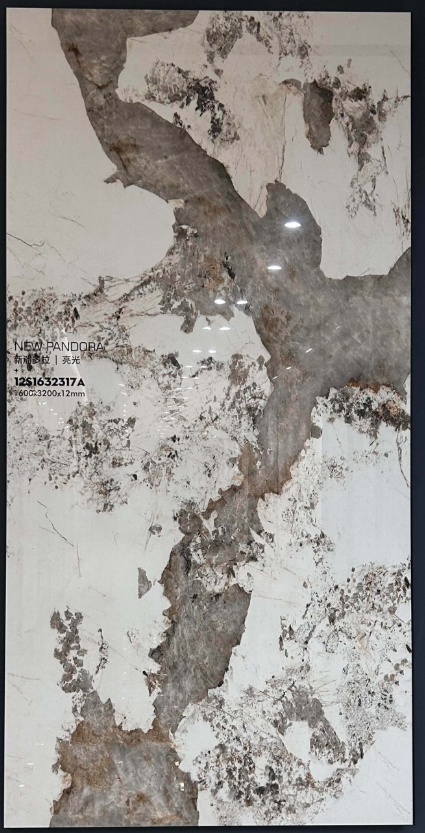
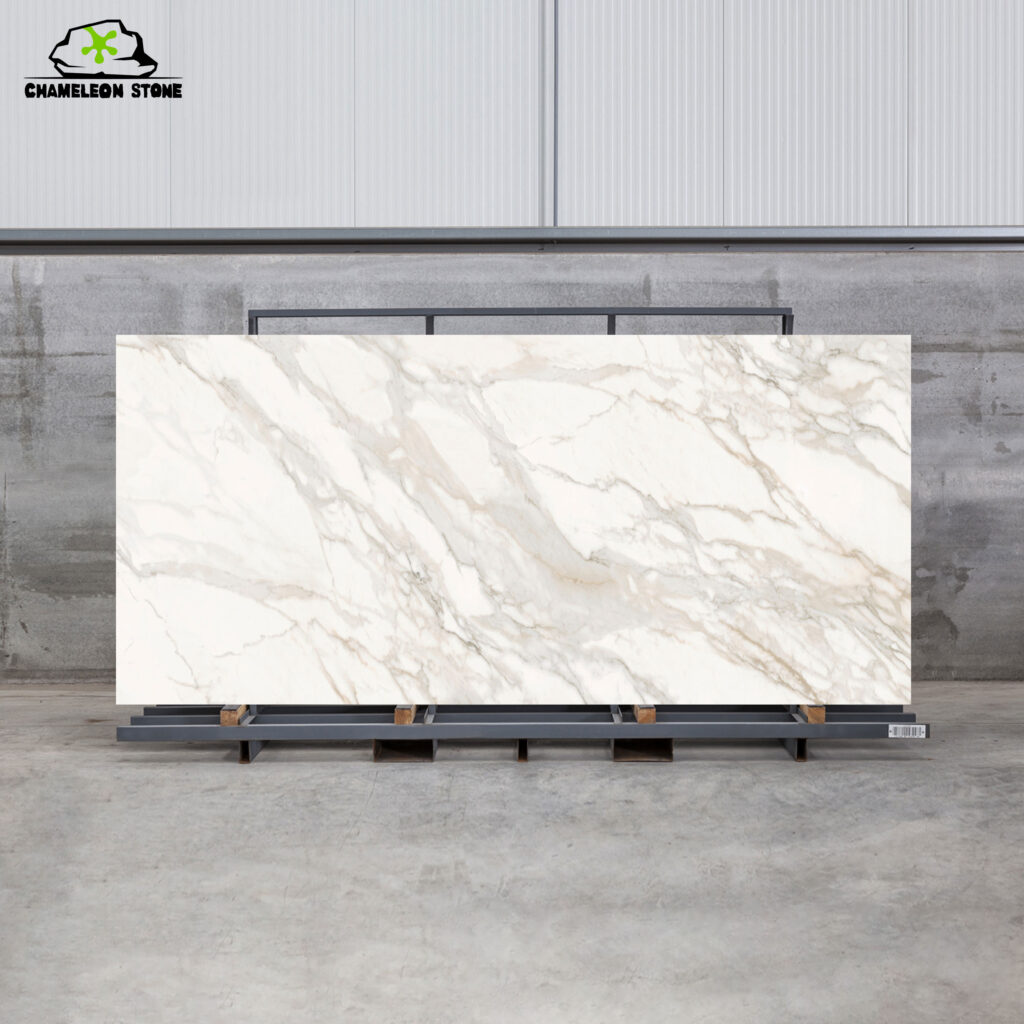
Sintered stone has become an increasingly important surface material for residential, hospitality, retail and commercial projects. Its large format, low-porosity surface and wide choice of designs make it suitable for applications ranging from wall cladding and flooring to kitchen countertops, vanity tops and custom furniture.
For importers, distributors, fabricators and project buyers, however, choosing sintered stone involves more than selecting an attractive pattern. Buyers also need to understand how the material is made, which slab size and finish suit the project, how the slabs will be processed, and what quality-control and packing information should be confirmed before shipment.
This guide introduces the essential points buyers should know before sourcing large-format sintered stone.
What Is Sintered Stone?
Sintered stone is an engineered mineral surface manufactured from carefully selected natural mineral ingredients. Depending on the formulation, these may include natural clay, silica, feldspar, quartz and other inorganic mineral materials.
During production, the raw materials are prepared, formed under very high pressure and processed at high temperature to create a dense slab. Digital inkjet technology and surface-finishing processes are then used to produce a broad range of stone-inspired patterns, colours and textures.
Unlike resin-rich artificial stone products, sintered stone is primarily mineral-based. Its dense structure and low porosity help make it practical for areas where hygiene, moisture resistance, wear performance and ease of maintenance are important.
How Is Sintered Stone Made?
Although production systems vary by manufacturer, a modern sintered stone process generally includes the following stages.
1. Raw-material selection
The mineral composition must be carefully controlled. Chameleon Stone’s supplied production information lists selected clays, silica, feldspar powder, quartz-related mineral materials and other inorganic oxides among the raw materials used in production.
Consistency at this stage matters because raw-material quality can affect the slab’s colour, whiteness, stability and final surface appearance.
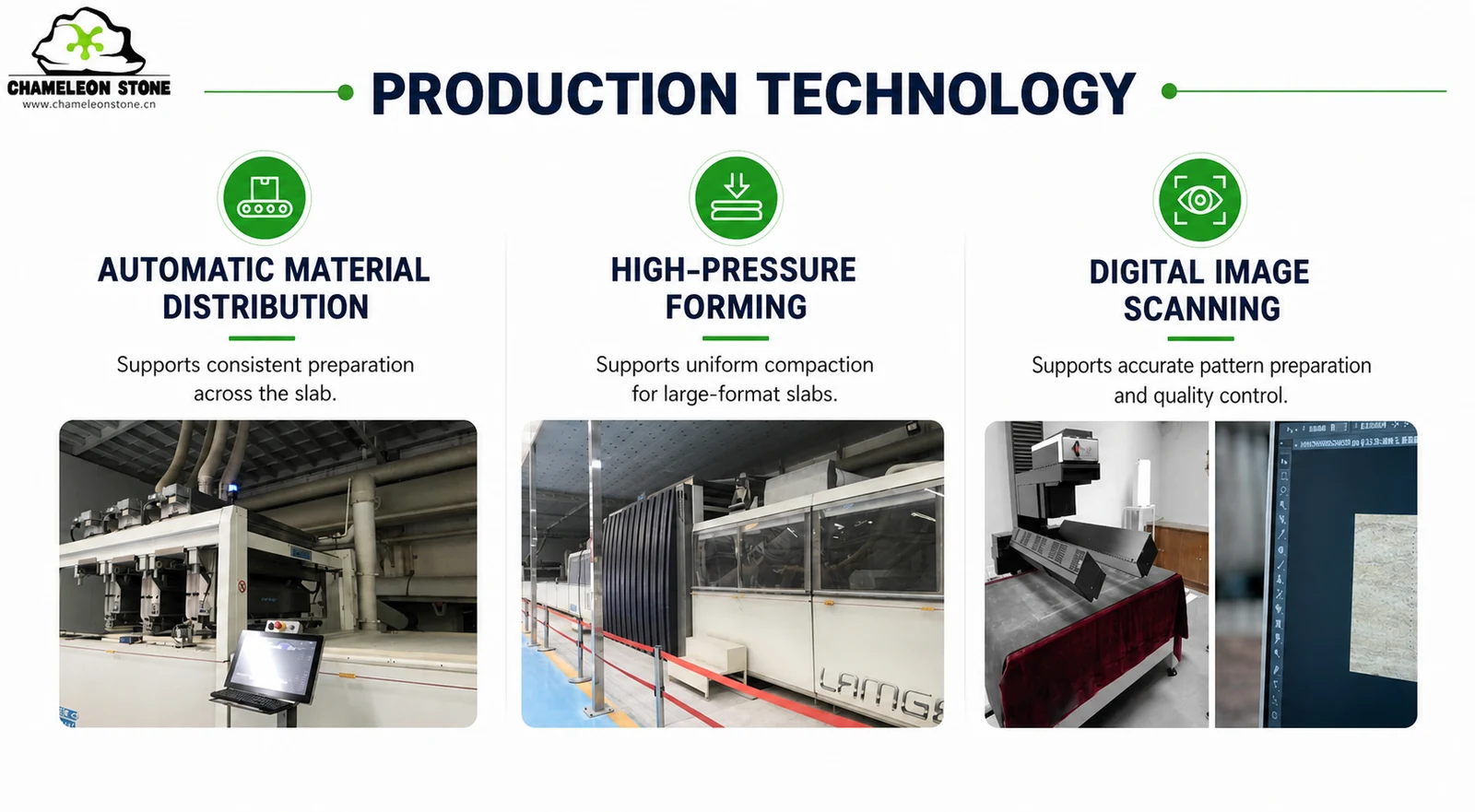
2. Material distribution and high-pressure forming
Prepared mineral materials are distributed and formed into large slabs. Chameleon Stone’s referenced production system uses belt-type mouldless forming technology and very high-pressure equipment to support uniform compaction across the slab.
Uniform forming is especially important for a 3200 x 1600 mm slab because project buyers need stable dimensions, controlled flatness and reliable fabrication performance.
3. Digital decoration
High-resolution inkjet technology is used to create marble, stone, concrete and other decorative effects. Pattern variation, positioning and colour control influence how natural the finished surface looks and how effectively multiple slabs can be combined in a project.
For large installations, buyers should request clear slab photographs or a layout preview before confirming visually sensitive designs.
4. High-temperature processing and finishing
The formed slab is processed at high temperature to create a dense mineral body. The surface is then finished according to the required appearance and touch.
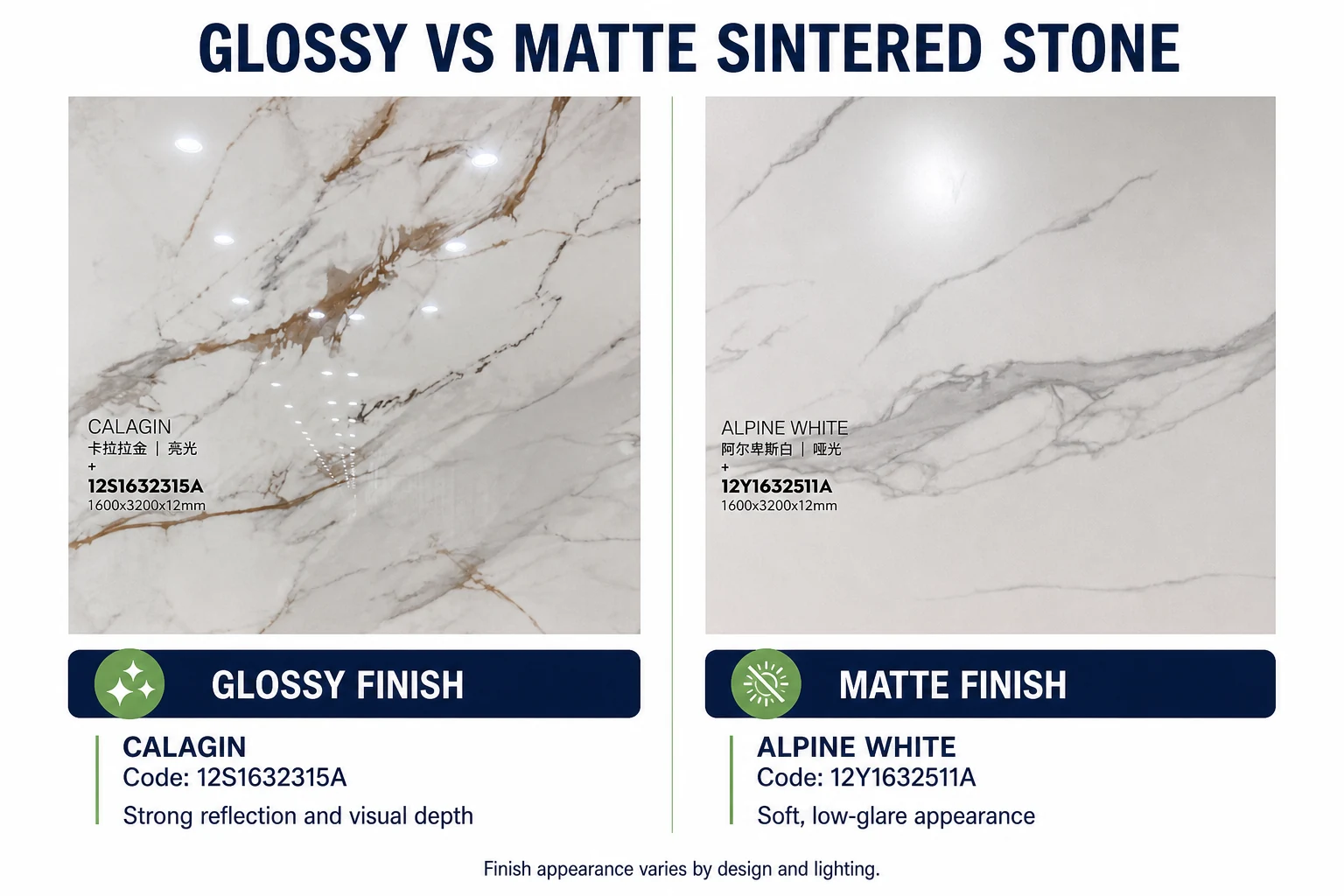
Chameleon Stone’s main 3200 x 1600 x 12 mm range is available in both glossy and matte finishes. Glossy finishes can emphasise colour and veining, while matte finishes create a softer appearance with less reflection.
5. Inspection and packing
Quality control should include dimensional and surface inspection. Chameleon Stone combines automatic inspection equipment with manual checks to monitor factors such as slab size, flatness and visible surface quality.
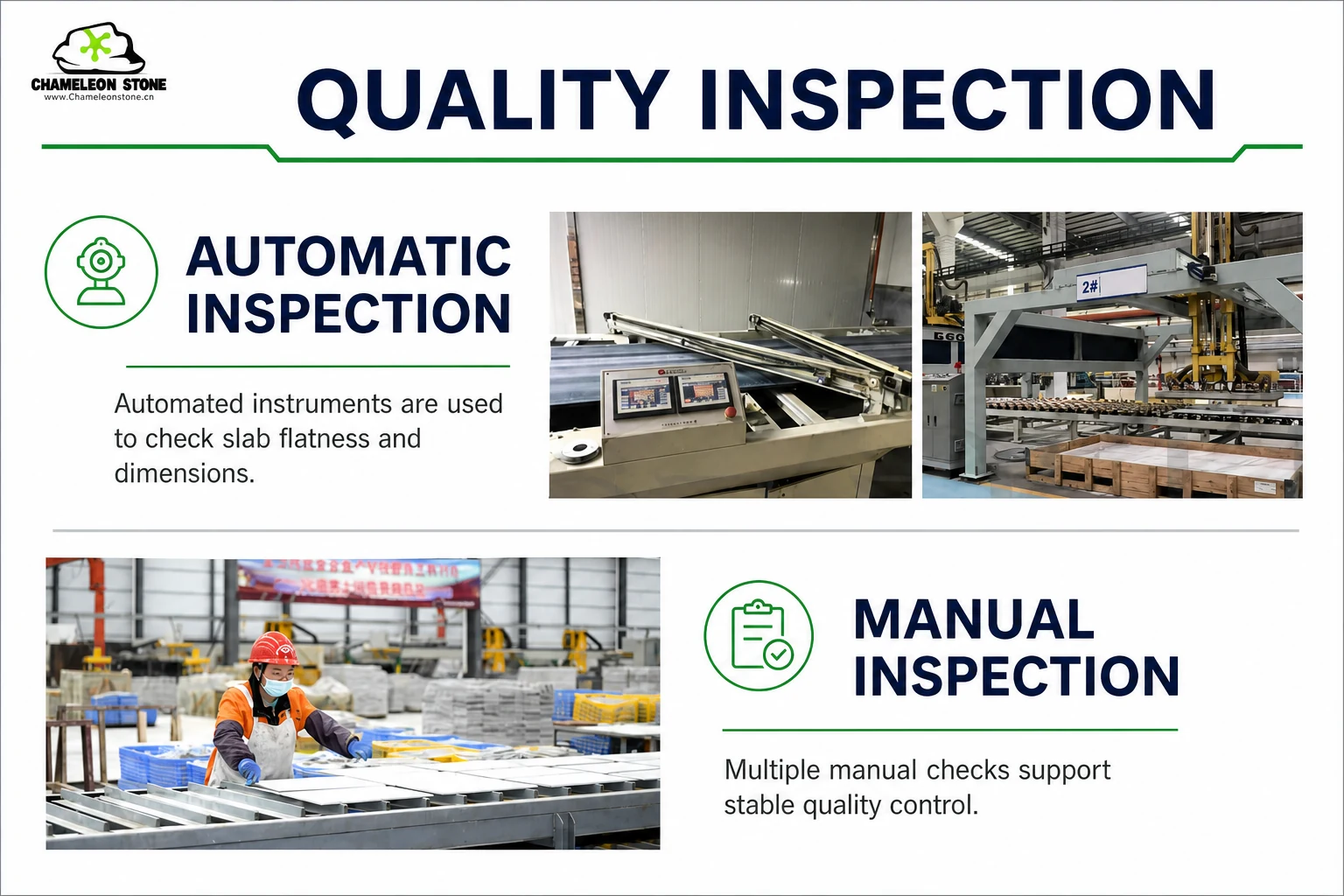
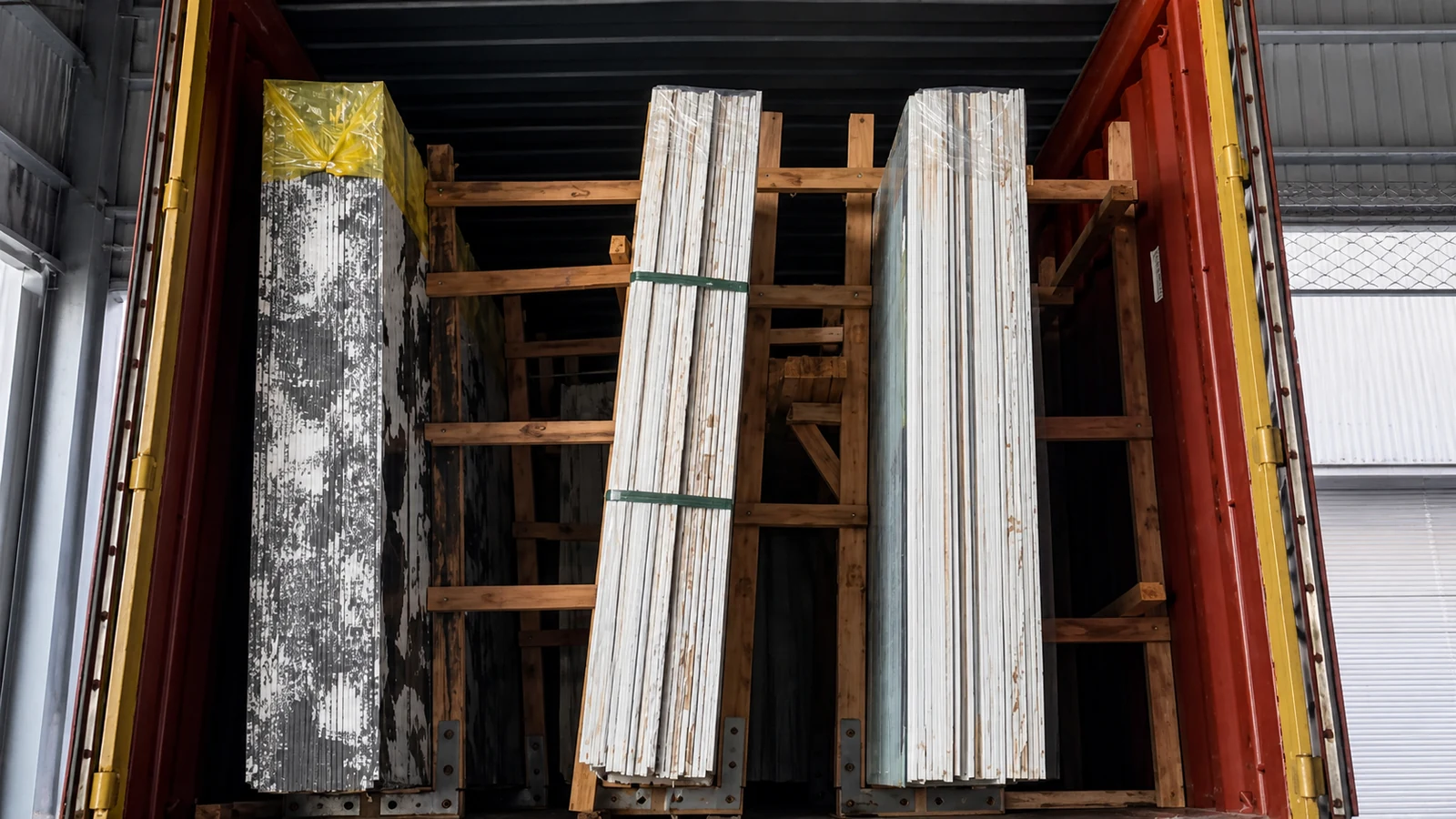
After inspection, large-format slabs require suitable handling and export packing. Secure support, careful loading and protection of slab edges are essential because damage risk is often concentrated at the edges and corners during transport.
What Are the Main Advantages of Sintered Stone?
Large-format visual continuity
A 3200 x 1600 mm slab covers a substantial area with fewer joints. This is valuable for feature walls, shower walls, kitchen islands and commercial interiors where uninterrupted pattern movement is part of the design.
Low porosity and easy maintenance
The dense mineral surface has low water absorption and is generally easy to clean. This supports use in kitchens, bathrooms, vanity areas and other spaces exposed to moisture or daily spills.
Project buyers should still request the applicable technical data and current test documents for the selected product, particularly when a tender or local standard specifies a particular test method.
Heat and fire performance
Mineral-based sintered stone offers strong heat performance and is widely considered for kitchen and commercial applications. For regulated projects, the relevant fire-classification or heat-resistance report should be confirmed for the exact slab series and market.
Wear and scratch performance
The supplied Chameleon Stone product information identifies strong surface hardness and wear resistance as key characteristics. Nevertheless, no architectural surface is completely damage-proof. Fabrication, installation and everyday use should follow the supplier’s recommendations.
Hygienic surface options
Low porosity makes sintered stone a practical surface for food-preparation and vanity areas. Where direct food-contact certification is required, buyers should request the current certificate and confirm that it applies to the selected product.
Broad decorative choice
Modern printing and finishing technologies make it possible to offer designs inspired by marble, quartzite, limestone, concrete and other natural materials. Buyers can choose between subtle neutral surfaces and high-movement statement patterns according to the project concept.
What Is Chameleon Stone’s Main Sintered Stone Format?
Chameleon Stone’s main large-format specification is:
| Item | Main specification |
|---|---|
| Slab size | 3200 x 1600 mm |
| Thickness | 12 mm |
| Finishes | Glossy and matte |
| Main applications | Walls, floors, kitchen countertops, vanity tops and custom interior surfaces |
The 12 mm thickness provides a practical balance for many interior and countertop applications. Final suitability still depends on the support system, fabrication details, installation method and applicable project requirements.
Where Can Sintered Stone Be Used?
Wall cladding
Large slabs reduce the number of visible joints and can create a clean, continuous surface. They are suitable for feature walls, lift lobbies, reception areas, bathrooms and commercial interiors.
Flooring
Sintered stone can be specified for flooring when the selected finish, slip performance, substrate and installation system are appropriate. Buyers should confirm slip-resistance requirements for wet or high-traffic areas.
Kitchen countertops and islands
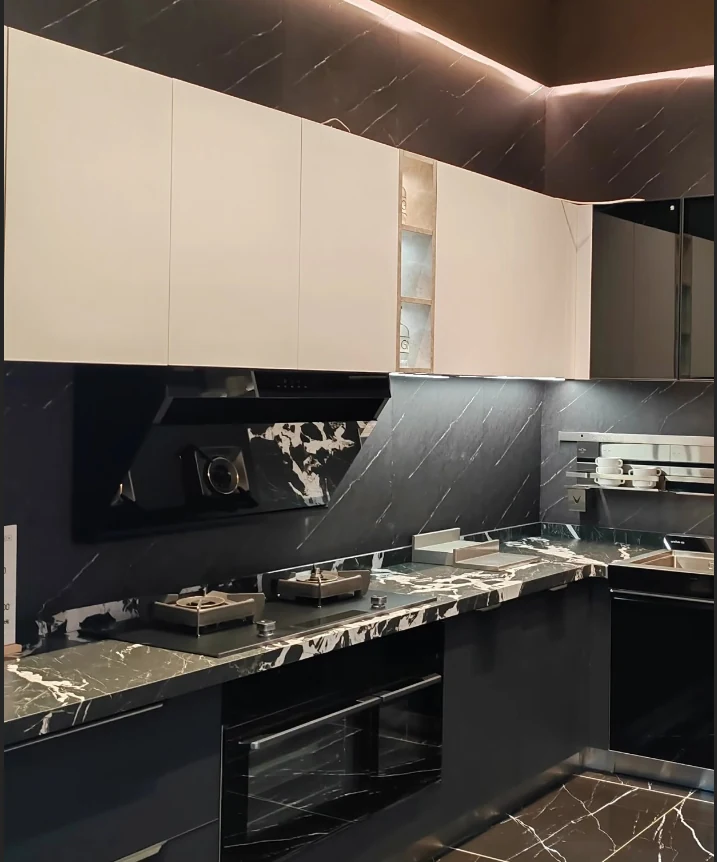
Its low porosity, mineral-based structure and design flexibility make sintered stone a strong option for countertops, islands and backsplashes. Fabricators should follow appropriate cutting, edge-processing and support guidelines, particularly around sink and hob openings.
Vanity tops and bathroom surfaces
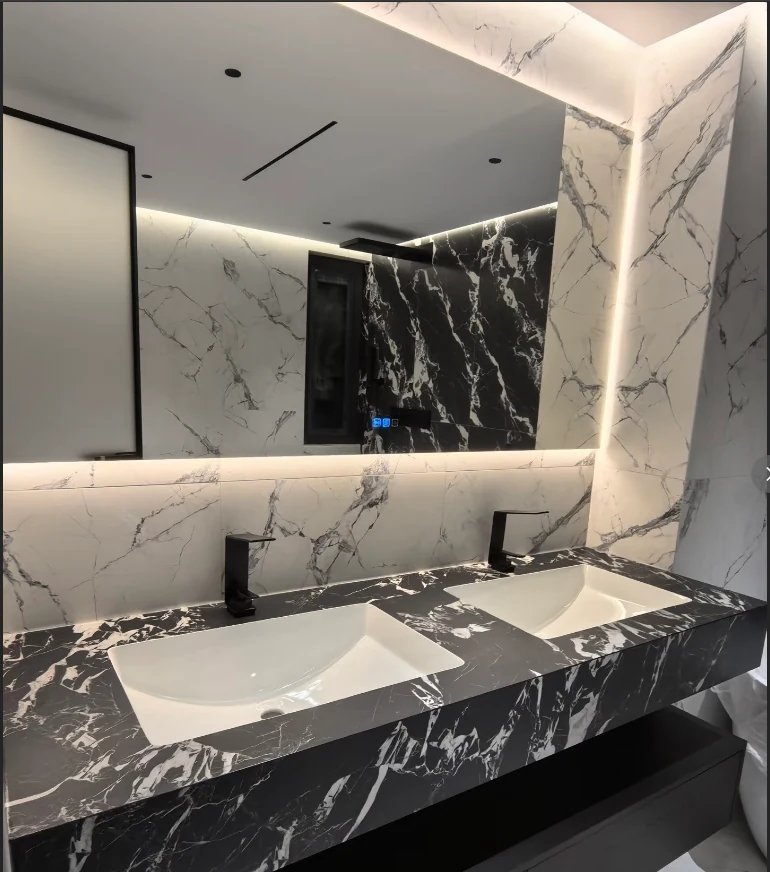
Sintered stone can be used for vanity tops, shower walls and bathroom cladding. Large-format slabs help reduce grout lines and simplify the visual composition.
Furniture and commercial applications
The material can also be processed for dining tables, coffee tables, reception desks, retail displays and other custom surfaces. The finished design should account for edge details, fixing methods, transport and on-site assembly.
Glossy or Matte: Which Finish Should Buyers Choose?
The choice depends on the design goal and application.
Glossy finish
- Creates stronger reflection and visual depth
- Highlights marble-style veining and colour contrast
- Works well for feature walls, reception areas and statement interiors
- May show fingerprints or reflections more readily under strong lighting
Matte finish
- Creates a softer and more restrained appearance
- Reduces glare under natural or commercial lighting
- Coordinates easily with timber, metal and neutral cabinetry
- Is often considered for floors, contemporary kitchens and calm hospitality interiors
For significant projects, buyers should evaluate physical samples under the actual lighting conditions before confirming the finish.
Sintered Stone Compared with Quartz Stone and Artificial Marble
| Consideration | Sintered stone | Quartz stone | Artificial marble |
|---|---|---|---|
| Main material character | Mineral-based, high-temperature processed surface | Quartz-based engineered surface commonly containing binder | Marble-powder and resin-based engineered surface |
| Large-format availability | Strong | Depends on supplier and series | Depends on supplier and series |
| Heat performance | Generally strong; verify product-specific report | Good for normal use; supplier guidance required | More sensitive to high heat |
| Water and stain performance | Low porosity | Low porosity | Varies by formulation and surface condition |
| Typical uses | Walls, floors, countertops, vanity tops and furniture | Countertops, islands and worktops | Interior surfaces, furniture and decorative applications |
The best material depends on the project. Buyers should compare appearance, test data, fabrication capability, installation requirements, budget and local standards rather than choosing from a single performance claim.
What Should Buyers Confirm Before Ordering?
Before placing an order, importers, distributors and fabricators should confirm:
- Exact slab size, thickness and finish
- Product code, colour and pattern variation
- Number of designs or faces available in the series
- Slab photographs or batch confirmation where colour continuity matters
- Applicable test reports and certificates
- Fabrication requirements and recommended tools
- Packing method, slab quantity and container-loading plan
- Inspection procedure before shipment
- Replacement or claim process for transport damage
- Sample approval before bulk production or shipment
This information reduces misunderstandings and helps the supplier, fabricator and project team work from the same specification.
Frequently Asked Questions
Is sintered stone suitable for kitchen countertops?
Yes. A correctly fabricated and supported 12 mm sintered stone slab can be used for countertops and islands. Fabrication details around cut-outs, edges and overhangs should follow professional guidance.
Can sintered stone be used on floors?
Yes, provided that the finish, slip performance, substrate, adhesive system and installation method suit the project conditions.
What is Chameleon Stone’s main slab size?
The main format is 3200 x 1600 x 12 mm.
Is a glossy or matte finish better?
Neither is universally better. Glossy surfaces deliver stronger reflection and visual impact, while matte surfaces provide a softer, lower-glare appearance. The choice should follow the application and design intent.
Should buyers request test reports?
Yes. For commercial, tendered or regulated projects, buyers should confirm that current reports apply to the exact product and the required local test method.
Source Large-Format Sintered Stone from Chameleon Stone
Chameleon Stone supplies 3200 x 1600 x 12 mm sintered stone slabs in glossy and matte finishes for walls, floors, kitchen countertops, vanity tops and other interior applications. Buyers can review a broad selection of marble-inspired and contemporary designs in the 2026 collection.
Explore four featured large-format sintered stone designs
For catalogues, samples, technical information and quotations, contact:
Stella (Sarah) Zhao
Sales Manager
Shenzhen Chameleon Stone Industry Co., Ltd.
Email: Stella@chameleonstone.cn
WhatsApp: +86 198 4974 0604
Technical performance, certificates and installation suitability should be confirmed for the selected product and project requirements before ordering.