Learning how to choose sintered stone slabs can look simple at first: find a design you like, confirm the price and place the order.
For professional buyers, however, the decision is more complicated.
The same sintered stone design may work perfectly for a feature wall but require a completely different fabrication approach when used for a kitchen island. Slab size, thickness, vein direction, cutting layout, finish and processing requirements can all affect the final appearance and total project cost.
For importers, distributors, countertop fabricators and project contractors, the right question is therefore not simply:
“Which sintered stone looks best?”
It is:
“Which sintered stone specification works best for this application?”
If you are new to the material, you can first read our guide on What Is Sintered Stone? for an overview of its production, properties and applications.
For buyers who are already evaluating slabs, here are seven important points to check before ordering.
1. Start with the Application, Not the Color
Color is usually the first thing buyers notice, but the application should be confirmed before selecting the final slab.
Sintered stone can be used for many applications, including:
- Kitchen countertops
- Kitchen islands
- Vanity tops
- Bathroom walls
- Feature walls
- Commercial interiors
- Dining tables
- Furniture surfaces
- Reception counters
Each application creates different requirements.
For example, a slab used for wall cladding mainly needs to work with the installation system and overall design.
A kitchen countertop, on the other hand, may require:
- Sink cut-outs
- Cooktop openings
- Edge polishing
- Faucet holes
- 45-degree mitered edges
- Reinforcement or support
- Careful planning around corners and overhangs
This means buyers should give the supplier the intended application before confirming the final specification.
For project orders, providing finished dimensions or drawings at an early stage can make material selection much more accurate.
2. Choose the Slab Size According to the Cutting Layout
Large-format slabs are attractive because they reduce joints and create visually continuous surfaces.
But slab size should not be selected only because “bigger is better.”
It should be selected according to how efficiently the finished pieces can be cut from the slab.
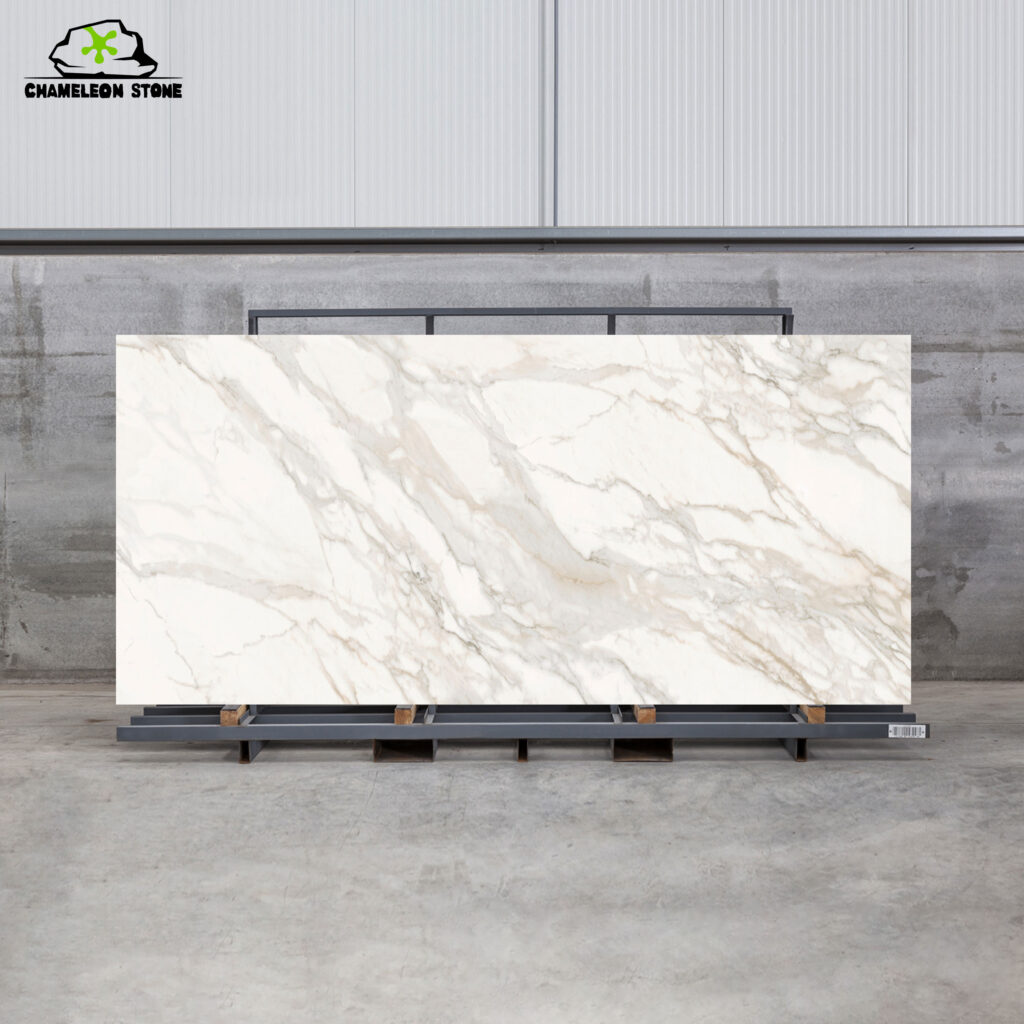
One of Chameleon Stone’s main sintered stone formats is:
3200 × 1600 mm
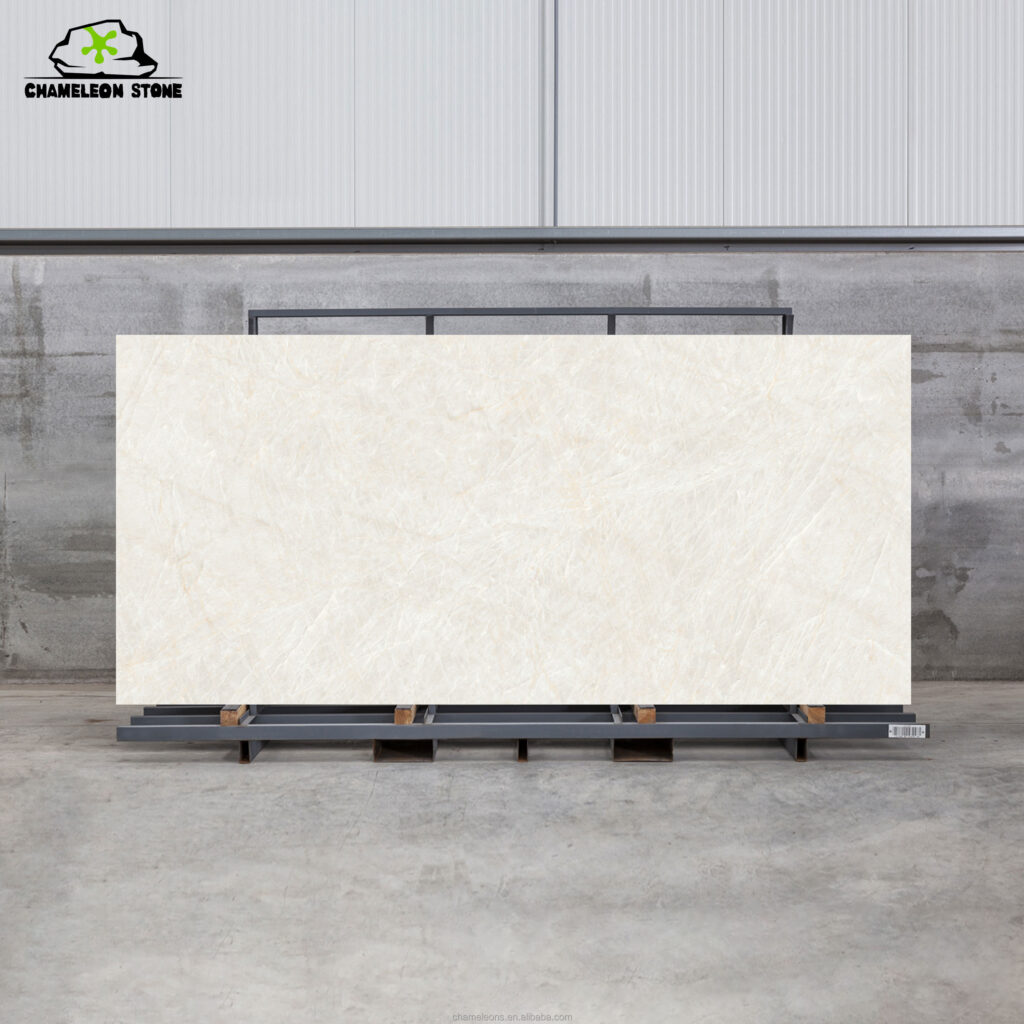
This size is particularly useful for applications such as:
- Kitchen countertops
- Large islands
- Full-height backsplashes
- Bathroom walls
- Feature walls
- Dining and conference tables
For a countertop fabricator, the important question is not only the price per square meter.
It is also:
How many finished pieces can be produced from each slab?
Two slabs with similar square-meter prices can result in very different final costs if one produces significantly more cutting waste.
Example
Suppose a project requires several vanity tops.
Instead of simply calculating the total finished square meters and ordering the equivalent slab area, a cutting layout can show whether two, three or even more vanity pieces can be produced from the same slab.
For hotel, apartment and multi-unit projects, this optimization can make a meaningful difference to the total material cost.
This is why finished dimensions are extremely useful when requesting a quotation.
3. Choose Thickness According to Fabrication Requirements
Buyers sometimes select thickness according to appearance alone.
But thickness also affects fabrication, support and edge design.
For many countertop and interior applications, 12 mm sintered stone provides a practical balance between appearance and fabrication flexibility.
However, a countertop does not necessarily need a physically thick slab to achieve a thick visual edge.
Want a 30 mm or 40 mm Appearance?
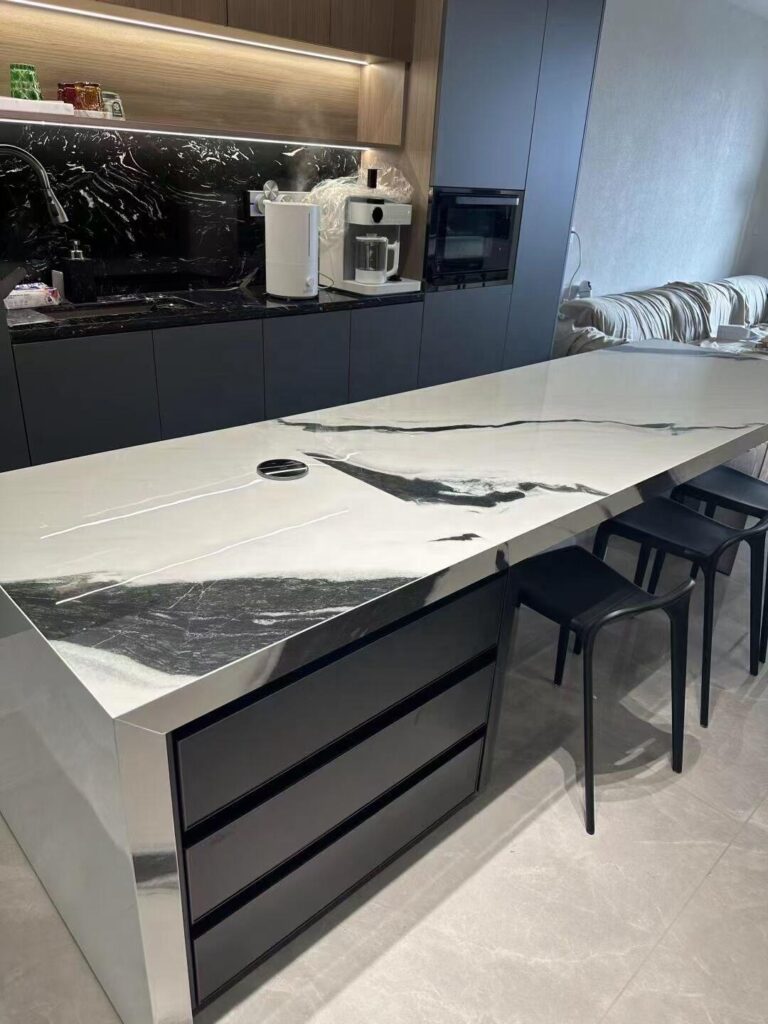
A fabricator can create a thicker-looking countertop using a 45-degree mitered edge.
For example, the slab edge and an additional strip can be cut at 45 degrees and joined together to create the appearance of a thicker countertop.
This allows designers to achieve a substantial edge profile while maintaining the characteristics of the selected slab.
Thickness decisions should therefore consider:
- Final application
- Support structure
- Edge design
- Cut-outs
- Finished dimensions
- Fabrication equipment
- Installation method
If a project has unusual edge details or large openings, discuss the fabrication method before confirming the slab.
4. Check the Pattern Scale and Vein Direction
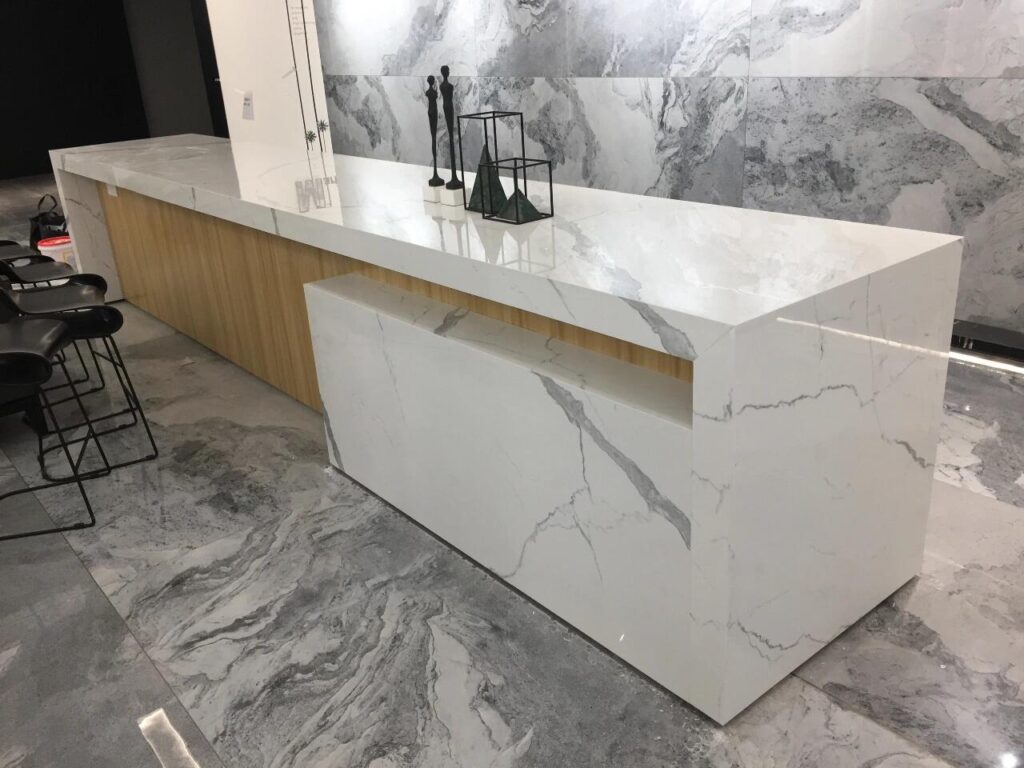
This is one of the most overlooked parts of selecting marble-look sintered stone.
A small sample may show the color accurately, but it cannot always show how the complete pattern will look across a 3200 × 1600 mm slab.
For marble-inspired designs, buyers should evaluate:
- Overall pattern scale
- Direction of the veins
- Number of available faces
- Variation between slabs
- How adjacent pieces will connect
This becomes especially important for:
Waterfall Kitchen Islands
The top and vertical side panels are visually connected.
If the cutting direction is planned carefully, the vein movement can continue from the countertop down the side of the island.
Countertop and Backsplash Combinations
Using the same design for the countertop and full-height backsplash can create a strong continuous visual effect.
The cutting layout should be considered before fabrication so that the pattern works well across both surfaces.
Large Feature Walls
For large commercial or residential walls, several slabs may be installed next to each other.
Buyers should therefore review slab photos or layout options when pattern continuity is important.
A beautiful individual slab does not automatically guarantee a beautiful multi-slab installation.
The layout matters.
5. Do Not Choose from Catalogue Images Alone
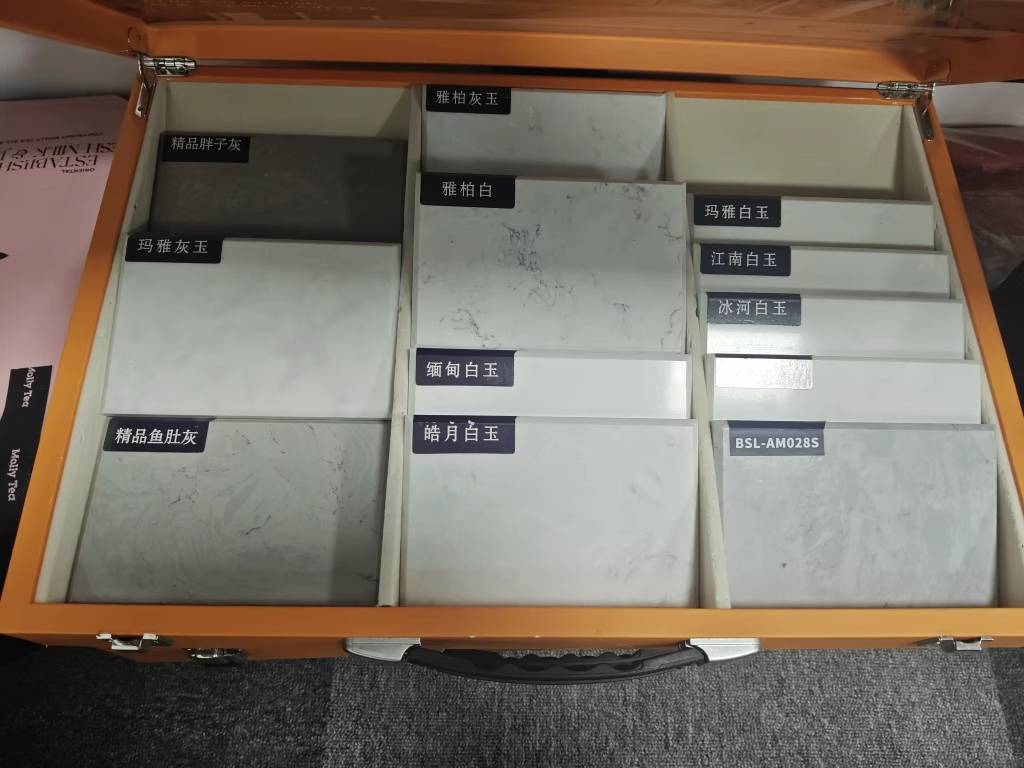
Digital catalogues are useful for narrowing down designs, but they should not always be the final step before a bulk order.
Screens, photography and lighting conditions can affect how colors appear.
For serious purchasing decisions, buyers can request:
- Physical samples
- Actual slab photographs
- Videos under natural lighting
- Batch photographs
- Close-up surface images
Why Physical Samples Matter
A physical sample helps buyers check:
- Background color
- Vein tone
- Surface texture
- Gloss level
- Coordination with cabinetry or other materials
This is particularly important for beige, white and warm neutral designs, where relatively small color differences can affect the overall interior concept.
For distributors introducing a new collection, samples are also useful for testing how colors are received in the local market before committing to larger inventory.
For project buyers, sample approval before bulk production or shipment can reduce misunderstandings later.
6. Check What Fabrication the Supplier Can Actually Provide
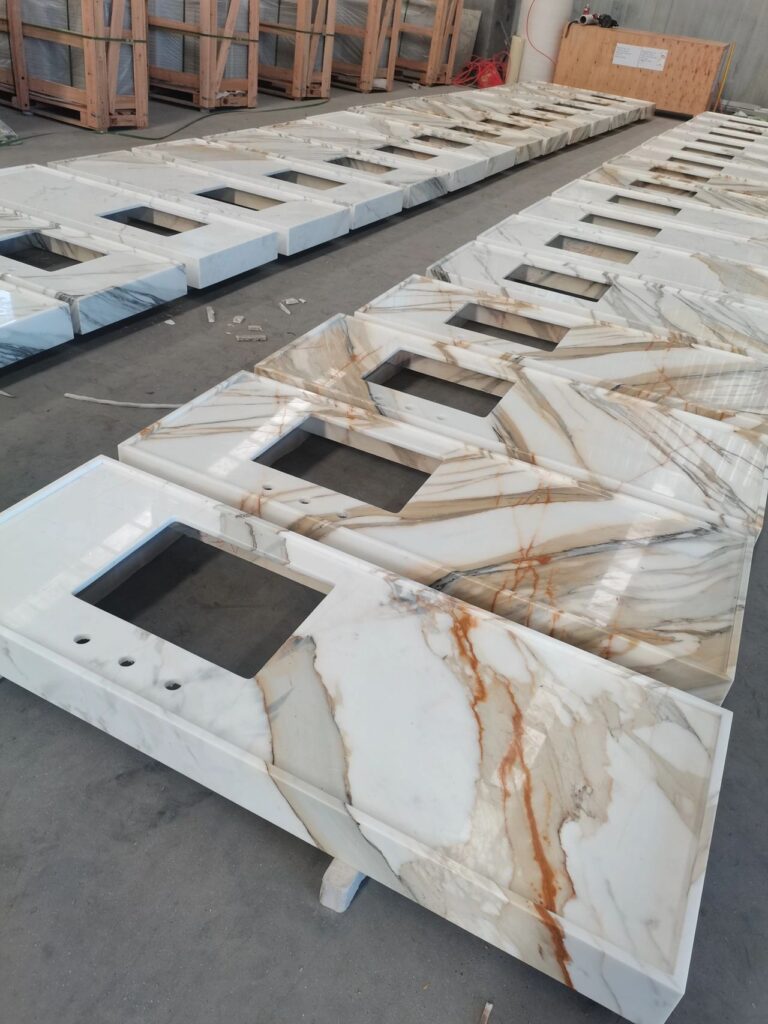
Buying slabs and buying finished project materials are two different sourcing strategies.
Some customers only require full slabs because they have their own local fabrication facilities.
Others may benefit from having part of the fabrication completed before shipment.
Depending on the project, processing requirements can include:
- Cut-to-size
- Straight cutting
- Edge polishing
- Sink cut-outs
- Cooktop cut-outs
- Faucet holes
- CNC processing
- 45-degree mitering
- Edge lamination
- Custom shapes
For project buyers, working with a supplier that understands both slab supply and fabrication can simplify communication.
Instead of ordering material first and trying to solve fabrication problems later, finished drawings can be reviewed before production.
This can help identify issues such as:
- Incorrect slab quantity
- Inefficient cutting layouts
- Difficult edge details
- Pattern-direction problems
- Inappropriate opening positions
- Packing risks for finished pieces
At Chameleon Stone, we work with both full slab orders and cut-to-size project requirements, allowing buyers to select the sourcing method that suits their own fabrication capability.
7. Compare Total Project Cost, Not Only Slab Price
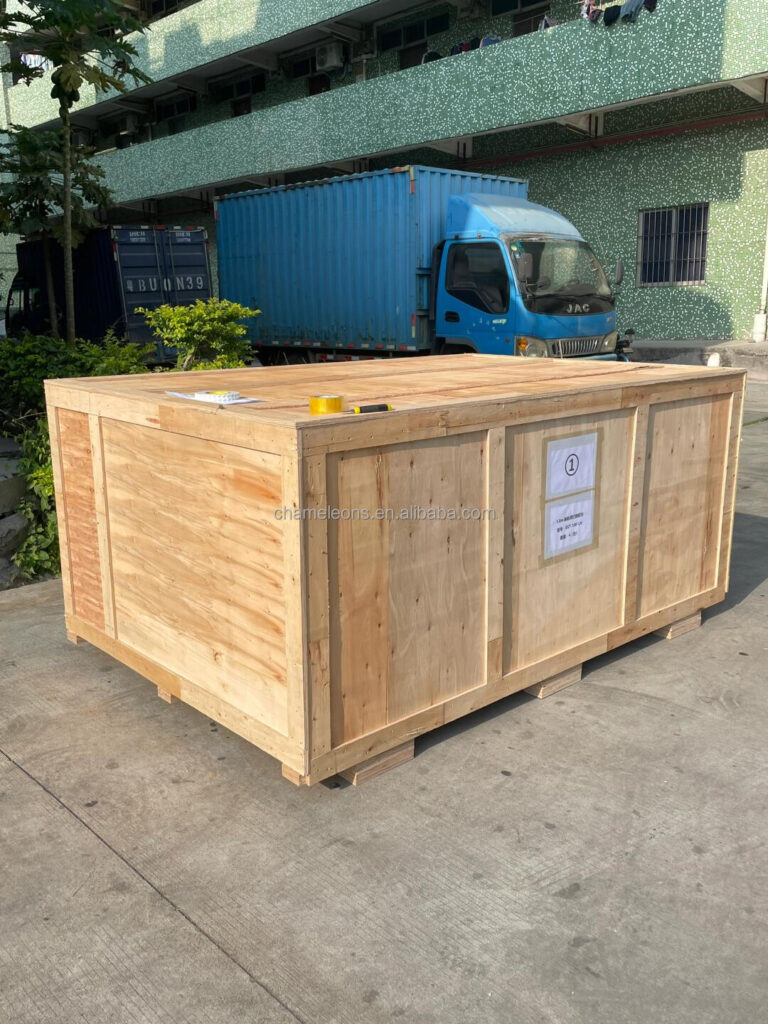
This is particularly important for importers, distributors and project buyers.
The lowest slab price does not always result in the lowest finished cost.
When comparing sintered stone quotations, consider:
- Slab price
- Slab dimensions
- Cutting utilization
- Fabrication cost
- Packing cost
- Container loading efficiency
- Shipping cost
- Breakage risk
- Replacement cost
- Local fabrication requirements
Example: Slab Price vs. Material Utilization
Supplier A may offer a slightly lower price per square meter.
But if the slab format does not match the finished product dimensions well, more material may become waste.
Supplier B may have a slightly higher square-meter price but allow more finished pieces to be produced from each slab.
In this situation, Supplier B may actually produce the lower final project cost.
This is why professional buyers should compare cost per finished piece or total project cost, rather than slab price alone.
HOW TO CHOOSE SINTERED STONE SLABS: A SIMPLE BUYER CHECKLIST
Before placing an order, send the following information to your supplier:
| What to Confirm | Why It Matters |
|---|---|
| Application | Determines the appropriate slab and fabrication method |
| Finished dimensions | Helps optimize cutting and slab quantity |
| Slab size | Affects joints and material utilization |
| Thickness | Affects fabrication, support and edge design |
| Finish | Influences appearance and maintenance |
| Color / product code | Confirms the exact selected design |
| Vein direction | Important for connected surfaces |
| Number of pieces | Allows accurate material calculation |
| Fabrication requirements | Determines processing cost and feasibility |
| Drawings | Helps identify problems before production |
| Sample approval | Confirms actual color and surface |
| Packing method | Helps reduce transport risk |
The more complete the information, the more accurate the supplier’s recommendation and quotation can be.
What Information Should You Send When Requesting a Quote?
If you are contacting a sintered stone supplier, you do not necessarily need a complicated specification sheet.
For an initial quotation, these five pieces of information are usually a good starting point:
1. Application
Countertop, wall, vanity, table, project fabrication, etc.
2. Required slab size or finished dimensions
Full slabs or finished dimensions.
3. Thickness
If you are unsure, explain the application and ask for a recommendation.
4. Quantity
Number of slabs, square meters or finished pieces.
5. Destination
Country, port or delivery location.
For fabricated orders, drawings or sketches are especially helpful.
How Should Distributors Choose Sintered Stone Designs?
Distributors have a slightly different challenge from project buyers.
A project buyer selects material for one particular design.
A distributor needs designs that can appeal to multiple customers.
Instead of choosing only visually dramatic colors, it is usually better to build a balanced collection.
A practical selection may include:
Classic White Marble Looks
White and grey marble-inspired designs remain versatile for:
- Kitchens
- Bathrooms
- Countertops
- Wall applications
Warm Neutral Designs
Beige, cream, travertine-look and quartzite-inspired designs work particularly well with:
- Timber cabinetry
- Warm contemporary interiors
- Hospitality projects
- Residential developments
Statement Designs
Black, strongly veined or high-contrast slabs can be used as feature products for:
- Islands
- Reception desks
- Feature walls
- Luxury commercial interiors
A distributor can therefore combine core commercial designs with a smaller number of distinctive statement surfaces.
Final Thoughts
Knowing how to choose sintered stone slabs is not simply about selecting the most attractive pattern.
Professional buyers should consider the entire path from slab to finished installation:
Application → Size → Thickness → Pattern → Fabrication → Packing → Final Cost
Making these decisions before ordering can help reduce material waste, simplify fabrication and avoid unnecessary problems during installation.
For distributors, fabricators and project contractors, this is especially important when purchasing large-format slabs internationally.
Looking for Sintered Stone Slabs or Cut-to-Size Fabrication?
Shenzhen Chameleon Stone Industry Co., Ltd. supplies large-format sintered stone slabs for distributors, countertop companies and project customers.
Our sintered stone range includes large-format slabs such as 3200 × 1600 mm, with multiple thickness options available depending on the design and application.
We can also support project requirements including:
- Slab selection
- Material quantity calculation
- Cut-to-size fabrication
- Edge processing
- 45-degree mitering
- Custom countertop fabrication
- Export packing
- Container loading planning
If you are sourcing sintered stone for an upcoming project or your local distribution market, send us your application, dimensions, quantity and preferred designs.
We can help review slab options, cutting efficiency and fabrication requirements before you place the order.
Contact:
Stella (Sarah) Zhao
Sales Manager
Shenzhen Chameleon Stone Industry Co., Ltd.
Email: Stella@chameleonstone.cn
WhatsApp: +86 198 4974 0604