Choosing the right sintered stone thickness is not only about appearance. Thickness affects fabrication, installation, edge design, weight, cost and the applications a slab can support.
For distributors, fabricators, designers and project buyers, selecting the correct thickness at the beginning can help reduce unnecessary fabrication costs and avoid installation problems later.
According to industry guidance on large-format surfaces, material selection should consider fabrication, installation and application requirements.
In this guide, we compare common sintered stone thicknesses including 6mm, 9mm, 12mm and 20mm, and explain where each option is commonly used.
Why Does Sintered Stone Thickness Matter?
Different applications require different combinations of strength, weight and fabrication flexibility.
A thin slab may be ideal for wall cladding or furniture surfaces, while a thicker slab may be more suitable for countertops, islands or projects that require a stronger visual edge.
When selecting a thickness, buyers should consider:
- Application
- Finished size
- Supporting structure
- Edge design
- Cut-outs and holes
- Transportation
- Installation method
- Required visual thickness
There is no single thickness that is best for every project.
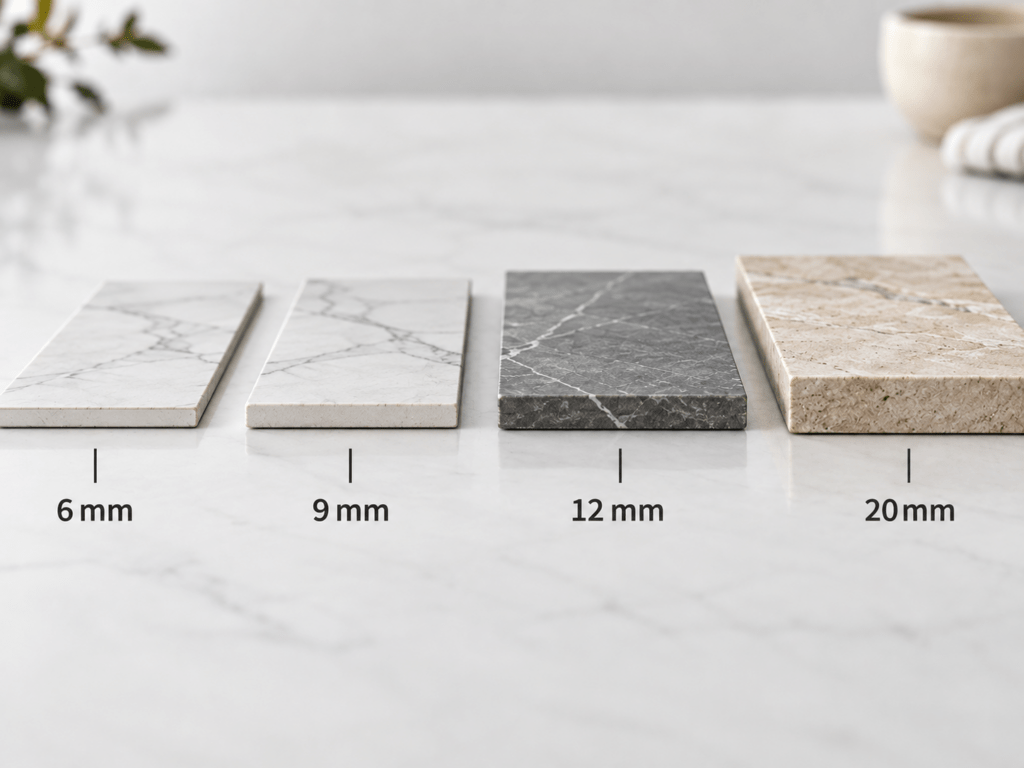
6mm Sintered Stone
6mm sintered stone is a relatively lightweight option and is often selected when reducing material weight is important.
When comparing sintered stone thickness, 6mm is one of the lighter options for vertical and decorative applications.
Common applications
- Interior wall panels
- Feature walls
- Cabinet and furniture surfaces
- Decorative panels
- Renovation projects
- Vertical applications
Because the slab is thinner, correct support and installation are especially important.
For countertop applications, we normally recommend evaluating the project structure and fabrication requirements before choosing 6mm material.
Key advantage
The main benefit of 6mm slabs is reduced weight, making them suitable for many vertical and decorative applications.
9mm Sintered Stone
9mm sintered stone provides a balance between a relatively slim profile and greater rigidity than very thin slabs.
This sintered stone thickness offers a balance between lower weight and greater rigidity.
It can be considered for:
- Furniture
- Table surfaces
- Wall applications
- Interior panels
- Selected countertop projects with suitable support
One important point for buyers is that not every thickness has the same body structure or production options.
For our current production range, 9mm is not available as a full-body product.
If a project requires exposed edges or special edge processing, this should be confirmed before ordering.
12mm Sintered Stone
For many fabrication and project applications, 12mm sintered stone is one of the most practical thicknesses.
For many countertop and fabrication projects, this sintered stone thickness provides a practical balance between strength and weight.
It offers a good balance between:
- Weight
- Strength
- Fabrication flexibility
- Shipping efficiency
- Finished appearance
Typical applications
- Kitchen countertops
- Bathroom vanity tops
- Table tops
- Furniture
- Commercial counters
- Cut-to-size projects
- Wall and interior applications
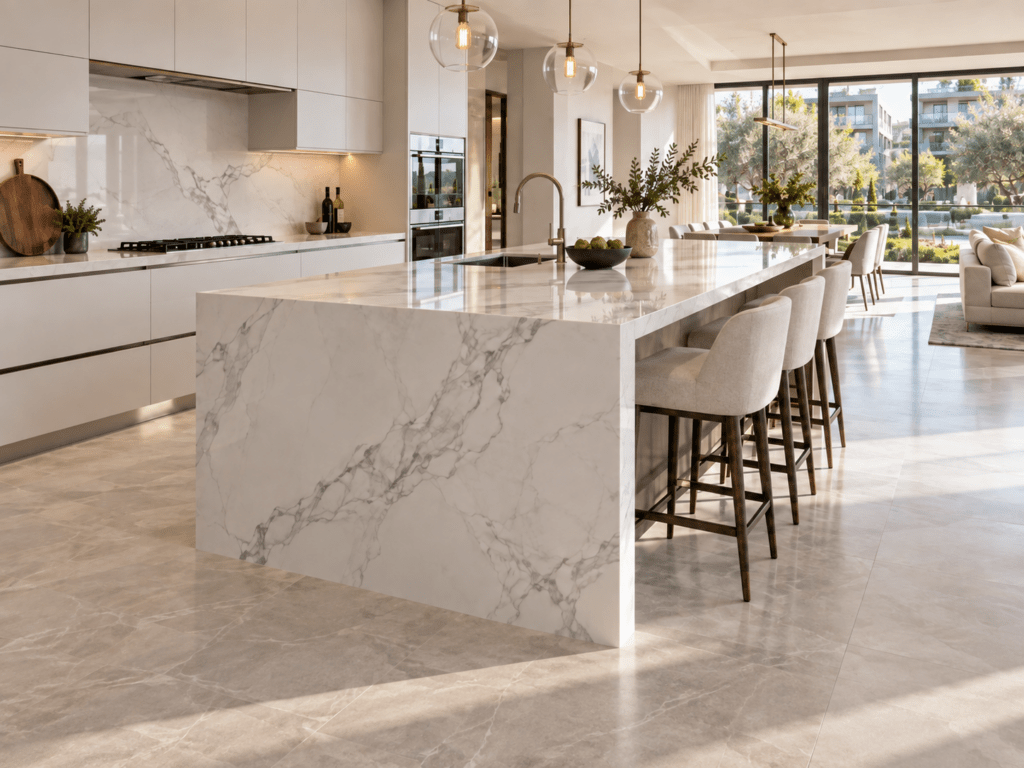
12mm slabs can also be fabricated with 45-degree mitred edges to create the appearance of a thicker countertop.
For example, a 12mm slab can be fabricated to achieve a visually thicker edge without using a solid thick slab throughout the entire countertop.
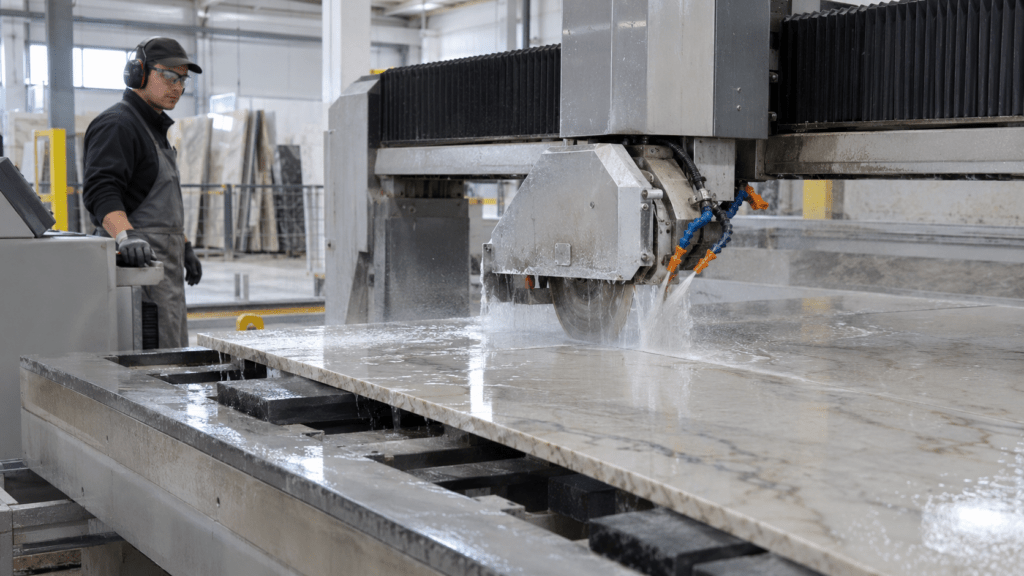
This is often useful for kitchen islands and premium interior projects.
20mm Sintered Stone
20mm sintered stone is commonly selected when buyers prefer a more substantial countertop appearance or when the fabrication design benefits from a thicker slab.
A 20mm sintered stone thickness is often selected when a more substantial countertop appearance is required.
Common applications
- Kitchen countertops
- Large kitchen islands
- Vanity tops
- Commercial counters
- Hospitality projects
- Premium furniture
Compared with thinner slabs, 20mm material is heavier and may increase transportation and installation requirements.
However, many buyers prefer its traditional countertop appearance.
For some designs, 12mm material with a mitred edge can provide a similar visual effect with less material weight.
12mm vs 20mm Sintered Stone: Which Is Better for Countertops?
There is no universal answer.
Choose 12mm when:
- Lower weight is preferred
- The project uses modern slim profiles
- Mitred edges will be used
- Transportation efficiency is important
- Custom fabrication is required
Choose 20mm when:
- A solid, traditional countertop appearance is preferred
- The project specification specifically requires 20mm
- A thicker exposed edge is required
- The installation system is designed for heavier slabs
For many modern kitchen projects, 12mm can be a very practical option, especially when professional fabrication and proper support are available.
Can a Thin Slab Look Like a Thick Countertop?
Yes.
One common fabrication method is a 45° mitred edge.
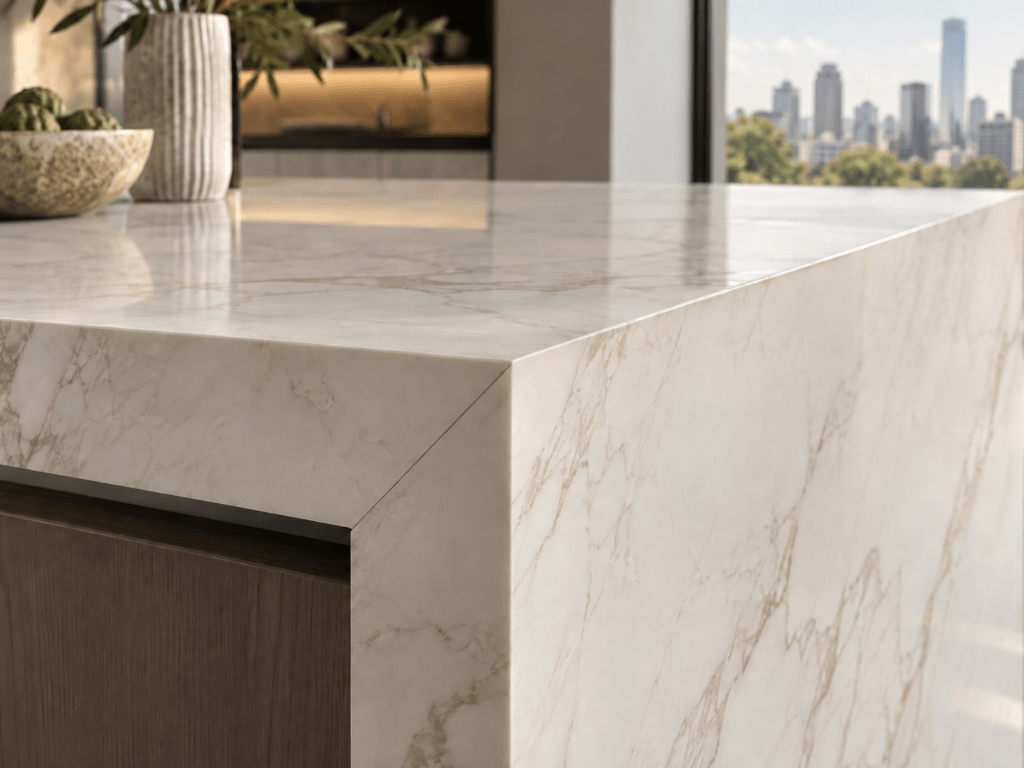
Instead of using an extremely thick slab, the fabricator cuts the edge at 45 degrees and joins additional material to create a thicker visual profile.
This method can create countertop appearances such as:
- 30mm
- 40mm
- 50mm
- Custom visual thicknesses
The final solution depends on the product, design and fabrication requirements.
This is especially popular for kitchen islands and waterfall-edge countertops.
Full-Body Sintered Stone and Thickness
Buyers should also check whether the selected color is available in a full-body version.
A full-body slab can provide a more consistent appearance through the edge, which may be useful for certain fabrication designs.
In our current range:
- 9mm is not available as full body
- Selected 12mm products can be available in full body
- Selected 20mm products can be available in full body
Availability depends on the specific design.
If exposed edges are important to your project, confirm the product structure before finalizing the order.
Thickness Is Only One Part of the Specification
When requesting a quotation, thickness alone is not enough.
To recommend a suitable material and calculate the correct quantity, suppliers normally need:
- Required size
- Thickness
- Quantity
- Application
- Project location
- Cutting requirements
- Edge requirements
- Cut-outs or holes
- Preferred surface or color
For cut-to-size projects, drawings are especially helpful.
How to Choose the Right Sintered Stone Thickness
A simple starting point is:
Wall panels and decorative surfaces:
Consider thinner options such as 6mm depending on the installation system.
Furniture and table applications:
9mm or 12mm may be considered depending on the structure and design.
Kitchen countertops and vanity tops:
12mm or 20mm are common options.
Projects requiring a thick visual edge:
Consider 12mm with mitred fabrication or a 20mm slab depending on the design.
The final choice should always consider the complete fabrication and installation system rather than thickness alone.
Need Help Choosing the Right Thickness?
At Chameleon Stone, we supply sintered stone slabs and support cut-to-size and project fabrication for international buyers.
Send us your:
Size + Thickness + Quantity + Application
and we can help recommend a suitable material and fabrication solution.
Request a Quote or Chat with us on WhatsApp for project support.
FAQ
What is the most common sintered stone thickness for countertops?
12mm and 20mm are commonly considered for countertop applications. The best choice depends on the supporting structure, fabrication method and required appearance.
Is 6mm sintered stone suitable for countertops?
6mm material is more commonly used for lighter or vertical applications. Countertop use should be evaluated carefully based on support and fabrication requirements.
Can 12mm sintered stone look like a 40mm countertop?
Yes. A 45-degree mitred edge can be used to create a thicker visual profile.
Is thicker sintered stone always better?
No. A thicker slab may increase weight and cost. The correct thickness depends on the project application and installation system.
Is full-body sintered stone available in every thickness?
No. Full-body availability depends on thickness and design. It should be confirmed before ordering.
If you are unsure which sintered stone thickness suits your project, send us your size, quantity and application for a recommendation.