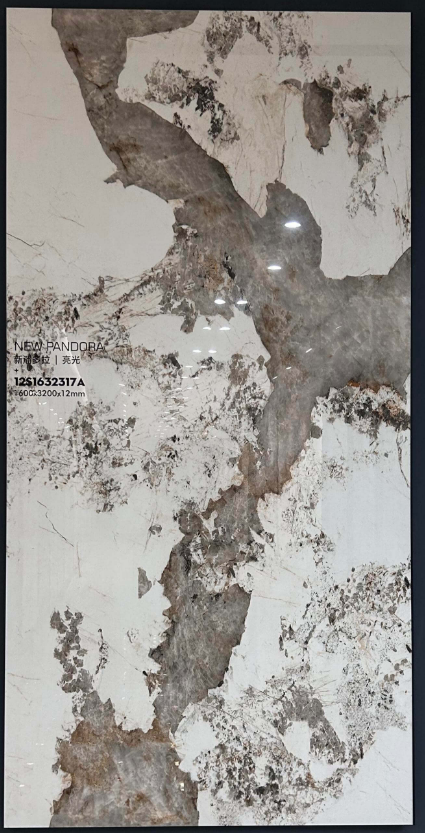
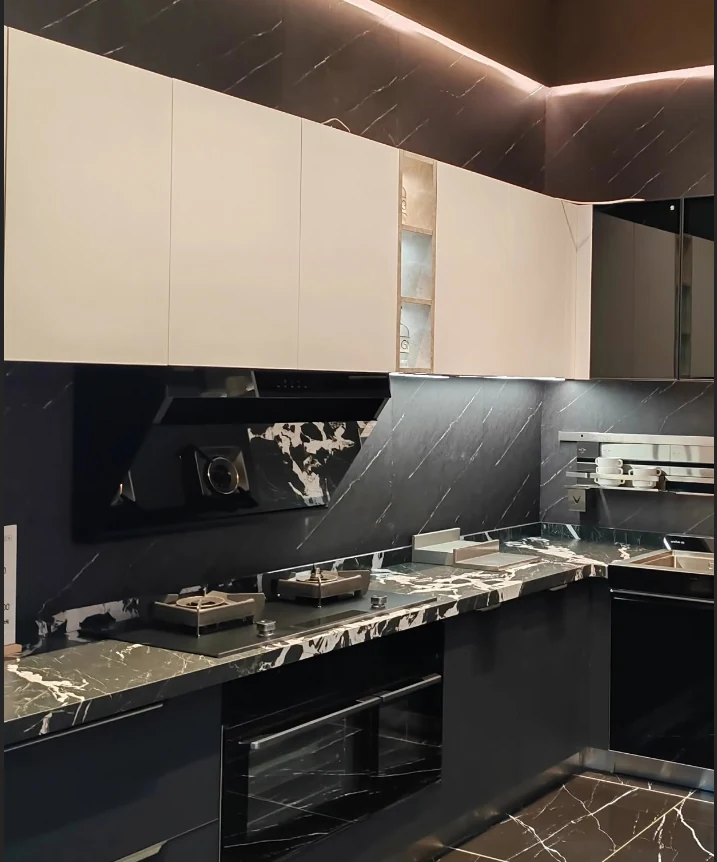
Buying sintered stone slabs wholesale involves more than comparing a price per square meter.
When sourcing sintered stone slabs wholesale, buyers should compare more than the slab price.
For distributors, fabricators and commercial project buyers, the real purchasing decision usually depends on slab size, thickness, pattern consistency, fabrication capability, packing, loading efficiency and delivery requirements.
Confirming these details before placing an order can reduce material waste, avoid production misunderstandings and make the final landed cost easier to evaluate.
This guide explains seven important points buyers should check when sourcing sintered stone slabs for wholesale or project use.
What Should Buyers Check Before Ordering Sintered Stone Slabs Wholesale?
The most important points are:
- slab size
- thickness
- application
- required quantity
- pattern requirements
- fabrication details
- packing and shipping method
For project orders, finished dimensions or drawings should also be provided whenever possible.
A supplier can then evaluate whether full slabs or cut-to-size fabrication is the better option.
1. Confirm the Slab Size
Slab size directly affects cutting efficiency, joint layout and material consumption.
Different applications may require different slab formats.
Large-format slabs are commonly considered for:
- kitchen islands
- countertops
- vanity tops
- table tops
- wall panels
- reception counters
- commercial interiors
At Chameleon Stone, available formats may include large slabs such as 3200 × 1600 mm as well as other project-oriented sizes, depending on the product and specification.
For wholesale buyers, the preferred slab size should be confirmed together with container planning and market demand.
For project buyers, finished dimensions should ideally be checked before material allocation.
For larger projects, you can also review our guide on slab consumption and cutting layout.
2. Choose the Thickness According to the Application
Thickness should not be selected only according to appearance.
For sintered stone slabs wholesale orders, packing and container loading should be confirmed before shipment.
The correct thickness depends on:
- installation method
- structural support
- edge design
- openings
- transportation
- final application
Common sintered stone thicknesses may include 6 mm, 9 mm, 12 mm, 15 mm, 18 mm and 20 mm, depending on the product.
For example, thinner slabs may be suitable for wall or furniture applications, while countertop and fabrication projects usually require additional consideration of support structure, cut-outs and edge details.
If a thicker visual edge is required, mitered or laminated fabrication may sometimes be used instead of choosing a much thicker slab.
For a more detailed comparison, review our sintered stone thickness guide.
3. Decide Between Full Slabs and Cut-to-Size Pieces
Wholesale buyers do not always need the same supply format.
Full slabs may be better when:
- the buyer has a local fabrication facility
- stock will serve multiple projects
- final dimensions are not yet confirmed
- local customers require flexible cutting
Cut-to-size supply may be better when:
- project drawings are confirmed
- repeated dimensions are required
- local fabrication costs are high
- openings and edge details are already known
- the buyer wants to reduce fabrication after arrival
Cut-to-size fabrication can include services such as:
- straight cutting
- polished edges
- mitered edges
- sink openings
- cooktop openings
- faucet holes
- custom shapes
Learn more about our cut-to-size sintered stone fabrication options.
4. Confirm Pattern and Color Consistency
This is particularly important when several slabs or finished pieces will be installed together.
For buyers looking for a clean white surface, Bright Moon White artificial stone is another option for project applications.
For some projects, buyers may require:
- similar vein direction
- coordinated slab layout
- book-matched appearance
- repeated visual consistency
- specific cutting orientation
Not every design can produce identical finished pieces.
The supplier should therefore understand whether the project requires general color consistency or highly controlled pattern matching.
For repeated furniture, hotel vanity units or large commercial projects, slab selection and cutting layout should be planned before production begins.
This is especially important when a buyer wants multiple finished pieces to look visually related.
5. Check Fabrication Capability Before Placing the Order
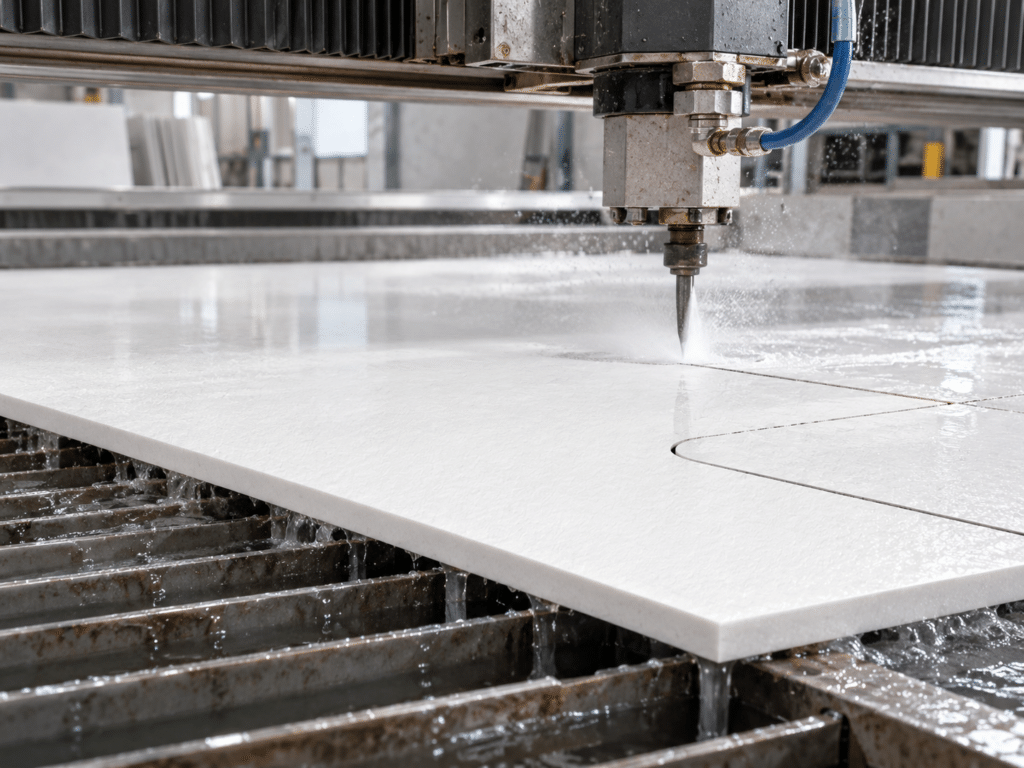
A low slab price is not always the lowest project cost.
If fabrication will be completed before shipment, buyers should confirm whether the supplier can handle the required work accurately.
Useful information includes:
- CAD or shop drawings
- finished dimensions
- edge type
- visible sides
- cut-out positions
- hole diameters
- corner radius
- pattern direction
- quantity per size
For complex projects, drawings reduce the risk of misunderstandings and allow the production team to check dimensions before cutting.
For countertop and furniture projects, buyers should also clearly mark which edges remain visible after installation.
For projects with specific testing or performance requirements, buyers can also refer to applicable ASTM International standards agreed for the material and application.
6. Confirm Export Packing and Container Loading
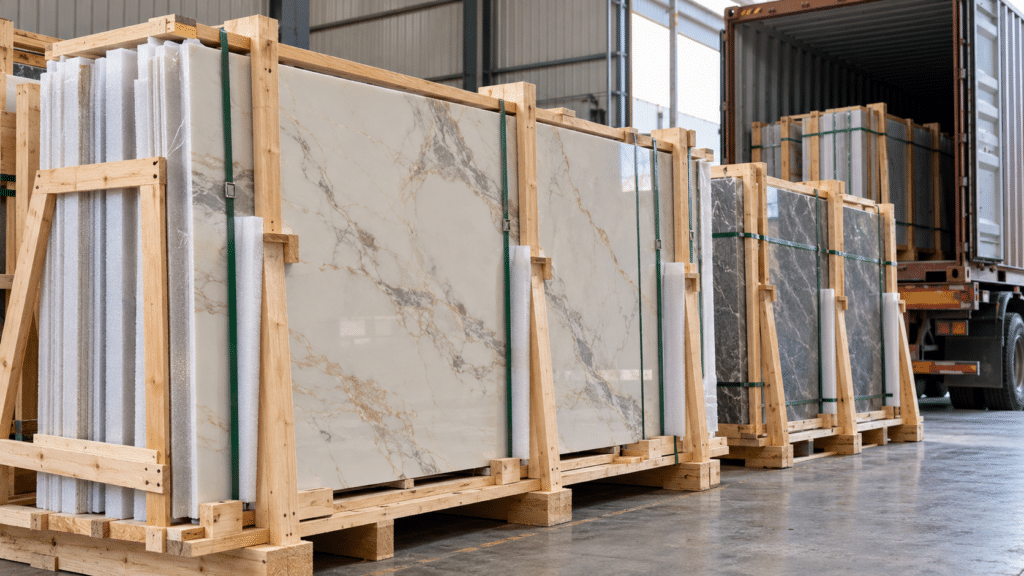
Wholesale stone orders are heavy and fragile, so export packing should be considered part of the purchasing decision.
Depending on the material and order format, packing may include:
- reinforced wooden frames
- wooden crates
- protective foam
- corner protection
- straps
- slab separators
Before shipment, buyers should confirm:
- pieces per package
- package dimensions
- gross weight
- container type
- loading quantity
- unloading requirements
For full-slab wholesale orders, container weight limits may be more important than container volume.
For cut-to-size orders, package design should also protect finished edges and openings.
7. Compare the Total Landed Cost
When comparing sintered stone slabs wholesale, buyers should not evaluate slab price alone.
The total cost may include:
- material
- fabrication
- material waste
- packing
- inland transportation
- ocean freight
- customs charges
- local fabrication
- breakage risk
- installation preparation
A slightly higher factory price may still produce a lower total project cost if it reduces local fabrication, material waste or installation preparation.
For this reason, project buyers should compare complete supply solutions rather than only the initial slab price.
What Information Should You Send to a Sintered Stone Supplier?
For a faster and more accurate quotation, send:
- Required color or design
- Thickness
- Slab size or finished dimensions
- Quantity
- Application
- Fabrication requirements
- Destination country or port
If the project includes custom cutting, a drawing or dimension list is strongly recommended.
This allows the supplier to evaluate slab usage, fabrication requirements and packing before quotation.
Sintered Stone Slabs for Distributors vs Project Buyers

The purchasing priorities are often different.
Distributors usually focus on:
- popular slab sizes
- regular thicknesses
- stock turnover
- loading quantity
- marketable designs
- repeat supply
Project buyers usually focus on:
- confirmed dimensions
- visual consistency
- fabrication accuracy
- drawings
- packing
- installation schedule
View our stone project applications and custom fabrication solutions.
Understanding the buyer type helps determine the right supply solution.
Frequently Asked Questions
What is the best thickness for wholesale sintered stone slabs?
There is no single best thickness. The correct option depends on the application, structural support, fabrication requirements and local market demand.
Distributors buying sintered stone slabs wholesale should also consider stock turnover and local market demand.
Can sintered stone slabs be supplied cut to size?
Yes. Cut-to-size fabrication can be prepared according to confirmed project dimensions and drawings.
Can several finished pieces have exactly the same pattern?
Not always. Pattern consistency depends on the slab design, cutting layout and quantity. Buyers should confirm pattern requirements before production.
What information is required for a wholesale quotation?
The supplier normally needs the design, thickness, slab size or finished dimensions, quantity, application and destination.
Is a full container always the best option?
Not necessarily. The most economical quantity depends on product weight, order structure, destination and the buyer’s inventory or project requirements.
Looking for Sintered Stone Slabs Wholesale?
If you are sourcing sintered stone slabs for distribution, fabrication or a commercial project, send us:
size + thickness + quantity + application
We can help evaluate slab requirements, fabrication options, packing and project supply.
If you are sourcing sintered stone slabs wholesale for distribution or project use, send us your size, thickness, quantity and application.